Introduction
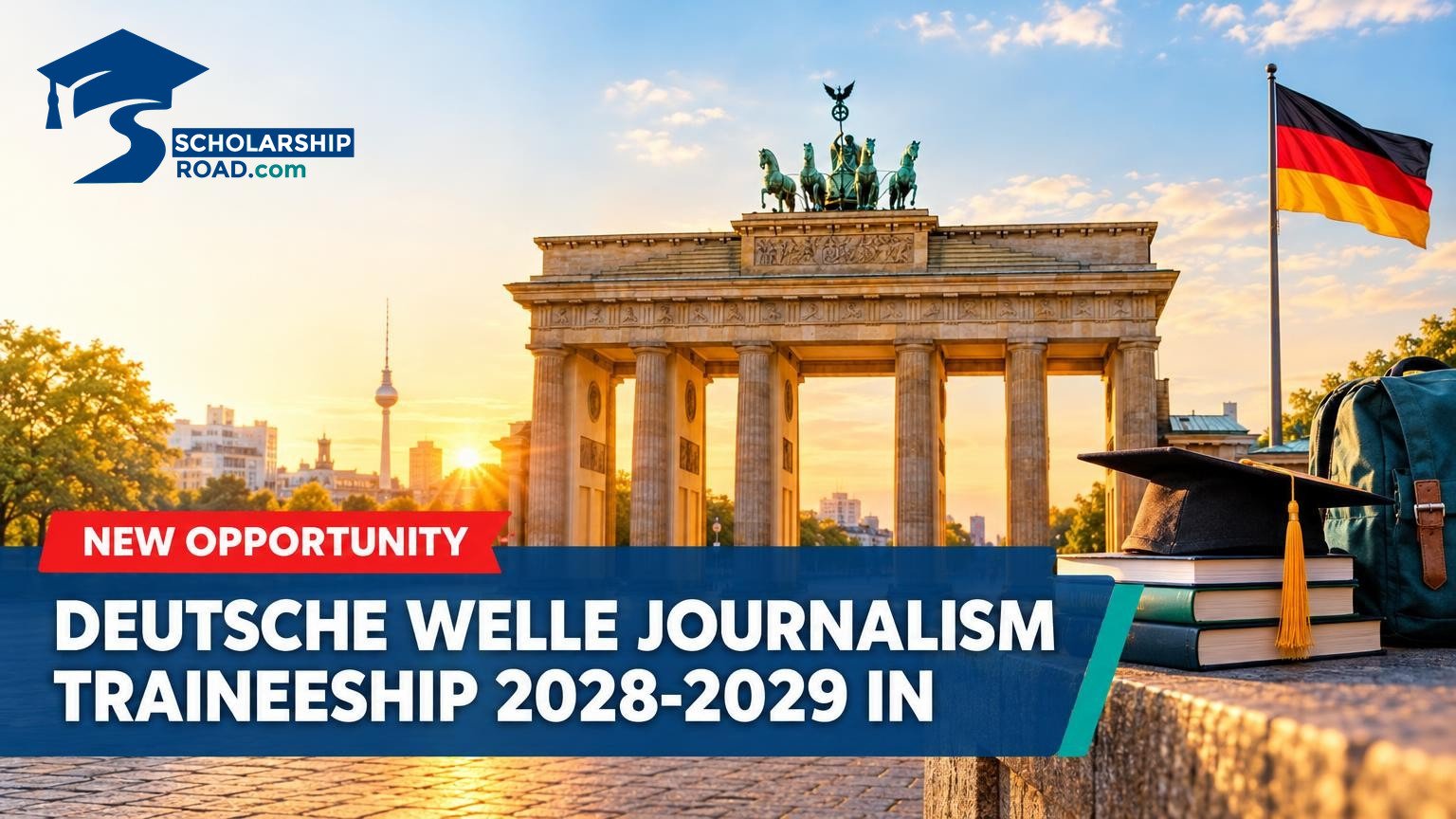
The Deutsche Welle Journalism Traineeship 2028–2029 in Germany is a paid training opportunity for applicants interested in journalism with an international broadcaster. Organized through DW Akademie, the program combines structured instruction with practical editorial experience over 18 months. It welcomes applicants worldwide, including people with journalism experience and professionals seeking to move into the field from other disciplines.
The traineeship runs from January 2028 to June 2029, with 12 trainees to be selected. Training includes activities in Berlin and Bonn, alongside possible placements with DW’s foreign bureaus. Applications must be completed online by November 17, 2026, at 12 p.m. CET.
Scholarship Overview
This opportunity is a professional journalism traineeship rather than an academic scholarship. Participants receive paid training covering different media formats and contemporary reporting methods. The program combines seminars, workshops, internships, and work with editorial teams.
- Program: Deutsche Welle Journalism Traineeship 2028–2029
- Duration: 18 months
- Financial arrangement: Paid traineeship with a salary
- Number of places: 12
- Training period: January 2028 to June 2029
- Applicant scope: International
Host Country
Germany is the host country, with internships and editorial training activities taking place in Berlin and Bonn. These locations form part of a program that also has an international reporting dimension. Trainees may have opportunities for placements with DW foreign bureaus, while the training description also identifies practical work with correspondent bureaus in Washington and Brussels.
Host Institution or Organization
The traineeship is an initiative of DW Akademie, Deutsche Welle’s international media development and training center. Participants train with an international broadcaster operating in 32 languages. They also receive instruction and mentorship from experienced media trainers and collaborate with DW editorial teams from the beginning.
Available Fields of Study
The training focuses on journalism and media practice rather than a university degree subject. Areas covered include television hosting, multimedia storytelling, data journalism, social media, virtual reality, and the use of artificial intelligence tools in reporting. Participants gain experience across television, online, and radio platforms, reflecting the program’s cross-media approach.
Applicants do not need to come exclusively from journalism backgrounds. The opportunity also welcomes people from areas such as law, economics, science, and technology who have a strong interest in moving into journalism. Across these backgrounds, the program seeks candidates who can contribute original perspectives and story ideas.
Scholarship Benefits
The main financial benefit is a paid traineeship offering a competitive salary. Over 18 months, participants receive structured training alongside practical newsroom experience. Six months of the program consist of seminars, complemented by workshops and editorial work.
- Practical experience across television, online, and radio journalism.
- Internships in Berlin and Bonn.
- Possible placements with DW foreign bureaus.
- Training and mentorship from experienced media trainers.
- Participation in international projects.
DW trainees have contributed to projects that have received recognition, including the CNN Journalism Award and the Grimme Prize. Many participants continue their careers with Deutsche Welle after completing their training. This describes previous career outcomes rather than a promise of employment for every trainee.
Eligibility Criteria
The traineeship is open to applicants from around the world who want to train with an international broadcaster. Before the program begins, candidates must have completed a university or college degree, an apprenticeship, or studies at a journalism school. Prior journalism or media-related experience is an advantage, particularly because trainees begin working with editorial teams early in the program.
Language proficiency is an important part of eligibility. The requirements distinguish between applicants who speak a DW program language, English, or German. Candidates should review the applicable language combination carefully before preparing their application.
- Native speakers of a DW program language: Excellent English at C1/C2 and good German at B1/B2.
- Native English speakers or applicants proficient in English at C1/C2: Good German at B1/B2.
- Native German speakers or applicants proficient in German at C1/C2: Excellent English at C1/C2.
DW also values curiosity, open-mindedness, analytical thinking, creativity, and a genuine commitment to journalism. Candidates should be able to work independently while contributing effectively to a team. Strong language skills and the ability to develop distinctive story ideas are relevant qualities.
Required Documents
The application includes a questionnaire and an application video. Applicants must complete all mandatory tasks and upload them to their application profiles before the deadline. Any additional documents requested during the application process must also be submitted.
Application Process
Applications follow a multi-level process and must be submitted online. Applicants should access the application portal through the organizer’s official website and register before completing the required tasks. Applications sent by email will not be processed.
- Review the eligibility, language, and qualification requirements.
- Register in the application portal.
- Complete the questionnaire and application video.
- Submit any additional documents requested.
- Upload all mandatory tasks to your profile before the closing time.
Registration alone does not complete the application: all mandatory tasks must be uploaded within the application period. Applicants should therefore allow time for both preparation and submission. Since the process has multiple levels, they should follow the organizer’s instructions carefully at each stage.
Important Dates and Deadline
The application window opens on October 13, 2026, at 12 p.m. CEST. It closes on November 17, 2026, at 12 p.m. CET. The different time-zone abbreviations matter, so international applicants should check the corresponding local closing time rather than relying only on the calendar date.
The traineeship begins in January 2028 and ends in June 2029. Applicants must complete their qualifying education or apprenticeship before training starts. These dates should be considered separately from the application deadline when assessing readiness to participate.
Tips for Applicants
As general preparation advice, start by comparing your qualifications and language abilities with the stated requirements. Make a checklist of the tasks displayed in the official portal rather than assuming that a previous application checklist applies. This can help you distinguish mandatory submissions from materials that are requested only in particular circumstances.
Plan to upload your work ahead of the deadline so that technical problems do not become a last-minute obstacle. Check that files open correctly and that your application video has clear sound and an understandable presentation. These are practical preparation suggestions, not additional requirements announced for this traineeship.
How to Prepare a Strong Application
As general application guidance, use concrete examples to explain your interest in journalism and the perspective you would bring. Relevant examples might come from reporting experience, previous studies, employment, or another professional field. Connect those examples to qualities the program values, such as analytical thinking, creativity, independent work, and teamwork.
For the questionnaire and video, prioritize clear communication and answers that directly address the instructions. Applicants changing careers can explain how their existing knowledge informs their interest in reporting without overstating their journalism experience. Review the application for consistency and accuracy before submitting it.
Frequently Asked Questions
Is the traineeship paid?
Yes, the program is a paid traineeship offering a competitive salary. Participants receive training over an 18-month period. The opportunity combines structured learning with practical editorial experience.
Can applicants without a journalism background apply?
Yes, the program welcomes applicants from other professional fields, including law, economics, science, and technology. They should have a strong interest in moving into journalism. Previous journalism or media experience remains an advantage.
Can applications be submitted by email?
No, emailed applications will not be processed. Applicants must register in the online portal and complete the mandatory tasks there. All required uploads must be completed before November 17, 2026, at 12 p.m. CET.
Conclusion
The Deutsche Welle Journalism Traineeship offers international applicants a paid route into practical, cross-media journalism training. Its combination of seminars, editorial work, and internships is suited to candidates ready to develop their reporting skills. Eligible applicants should prepare the required tasks carefully and submit through the organizer’s official online application system before the deadline.
Discover more from Scholarship Road
Subscribe to get the latest posts sent to your email.